African Swine Fever Preparedness Still Depends on Prevention as Vaccine Options Evolve
ASF preparedness still depends on biosecurity, surveillance, border controls, and vaccine safety as vaccine options continue to evolve.
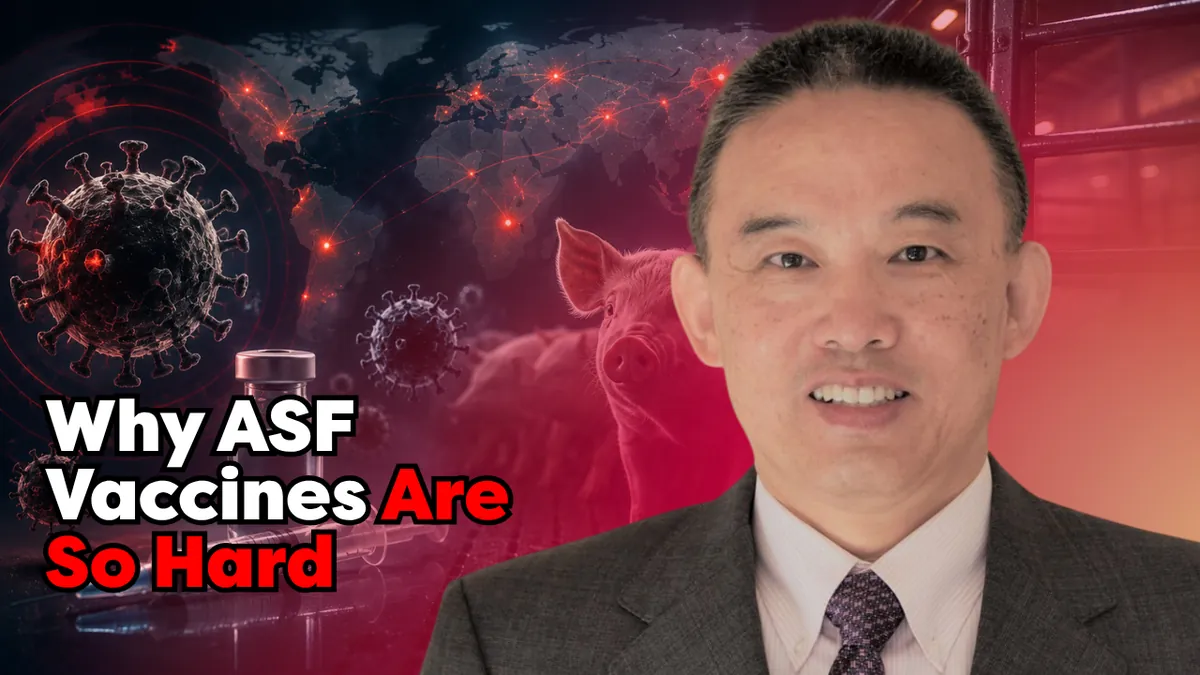
African swine fever creates a different preparedness problem than many familiar swine diseases. It is not classical swine fever, and it is not swine influenza. Those diseases involve different viruses, different control tools, and different levels of vaccine availability. Live attenuated ASF vaccines have received regulatory approval and are being used in some Southeast Asian countries, but availability remains limited and context-dependent. Vaccination is emerging as an additional control tool rather than a replacement for biosecurity, import controls, movement controls, and surveillance.
That changes how pork-producing countries need to think about risk. The most useful near-term question is not whether vaccine research is promising. It is how national systems and farms reduce the chance of virus introduction while vaccine options continue to develop and field evidence expands. Prevention remains essential for protecting pigs, export markets, and production continuity.
ASF Is Not Controlled by Familiar Swine-Virus Assumptions
Classical swine fever and African swine fever can sound similar, but they are biologically and operationally different. Classical swine fever, historically called hog cholera, is caused by an RNA virus and has vaccines that can support control. African swine fever is caused by a large DNA virus with no direct relationship to classical swine fever virus. A vaccine that works against classical swine fever cannot protect pigs from ASF because the targets are different.
The distinction matters during preparedness planning. Treating ASF as another version of a better-known swine disease can lead to unrealistic expectations about how quickly vaccination, diagnosis, or outbreak response would contain a new introduction. ASF has a much larger genome than simpler swine viruses and includes different genotypes. Its biology has also been studied by fewer laboratories because, in North America, work with ASF requires high-containment facilities and specialized resources. Those limits slow both basic understanding and applied vaccine evaluation.
ASF can spread through direct contact with infected pigs and through contaminated materials, including vehicles, equipment, clothing, feed, and pork products. Infected pigs can shed substantial amounts of virus, and movements of pigs, people, trucks, feed, equipment, or contaminated products can become part of the risk pathway.
Vaccine Safety Is as Important as Protection
Modified-live or attenuated vaccine approaches may offer protection because they expose the pig to a broader set of viral antigens than a narrow subunit vaccine. For ASF, that breadth may be important because the virus is large and the specific protective targets are still not fully defined. A subunit vaccine would be attractive from a safety standpoint, but a single-protein strategy has not yet provided the kind of proven field-ready answer that exists for some simpler viruses.
The safety standard for ASF vaccines is unusually consequential. Safety and efficacy need to be demonstrated in the animal categories, production systems, breeds, and real-world conditions relevant to the intended use. Depending on that use, evaluation may include reproductive safety, long-term stability, and the risk of reversion to virulence. A product that looks acceptable immediately after vaccination but later contributes to disease, reproductive failure, or market-age losses would create a new production problem rather than solve the original one.
That is why promising laboratory results do not automatically translate into broad commercial suitability. One attenuated approach described in the source material used extended cell-culture passage to introduce multiple mutations and gene deletions while retaining sufficient antigenic characteristics to induce protection under experimental conditions. Multiple mutations and deletions may contribute to attenuation, but genetic stability, residual virulence, protective efficacy, and the potential for reversion still require careful evaluation.
DIVA Capacity Affects Vaccine Use and Surveillance
A modified-live ASF vaccine also has to fit disease-surveillance needs. If vaccinated and infected pigs produce similar antibody profiles, veterinarians and regulators may struggle to distinguish vaccine response from infection with a wild-type virus. That problem is commonly framed as DIVA, or differentiating infected from vaccinated animals.
For serological DIVA strategies based on gene deletion, the deleted genes need to provide useful antigenic markers that can distinguish vaccination from wild-type infection. If a vaccine lacks those genes, vaccinated pigs should not develop antibodies against those specific proteins, while infected pigs exposed to the full wild-type virus may. In that case, diagnostic tests can potentially separate vaccinated animals from infected animals. Other genetic and diagnostic DIVA approaches may also support differentiation, depending on vaccine design and test performance.
This point links vaccine design with outbreak management. A vaccine that protects pigs but confuses surveillance could complicate trade decisions and response planning. A vaccine that protects pigs while allowing clear differentiation would be more useful for countries trying to preserve confidence in disease status. The evidence threshold is therefore not only biological protection; it also includes diagnostic compatibility and regulatory confidence.
National Prevention Starts at Borders and Awareness
For countries without ASF, the most immediate risk is introduction. Geographic distance does not eliminate that risk when international travel, pork products, commercial movement, and regional disease circulation can create pathways for contaminated material to enter a country. ASF presence in regions closer to North America increases the need for attention even where domestic herds remain free of the disease.
Border-level prevention focuses heavily on pork products and contaminated materials. Cooked or uncooked pork carried through airports or seaports can represent a risk if it contains virus and later reaches pigs, feed streams, waste channels, or environments connected to swine production. Because ASF does not infect people, travelers may underestimate the danger. The absence of human illness does not reduce the economic and animal-health consequences for pork producers.
National preparedness also depends on research capacity. ASF work requires scientists, equipment, high-containment facilities, animal studies, and funding. Limited research infrastructure slows answers on vaccine safety, diagnostics, and control tools. In that sense, prevention is not only inspection at the border. It also includes sustained investment in the technical capacity needed to respond before and after an introduction.
Farm Biosecurity Has to Reflect Real Movement Pathways
At the farm level, ASF prevention relies on reducing opportunities for virus to contact pigs. That includes people, pigs, trucks, feed, equipment, supplies, and any material that has contact with swine or swine environments. The exact design of a biosecurity program depends on how pigs are produced in a region and how workers, service providers, and vehicles move through farms.
Production systems differ. Some regions may be able to keep workers on-farm for long periods, while others depend on daily movement on and off the farm. Those cultural and operational differences affect what is realistic. A protocol that assumes minimal worker movement may not translate directly to a system where employees return home every day. The technical goal is not to copy a universal rule; it is to identify every contact route that could move contaminated material toward pigs and reduce that risk as much as the system allows.
The scale of modern production raises the stakes. Depopulating a small group of pigs is very different from managing thousands, tens of thousands, or more animals on a large site. Humane euthanasia, environmental safety, disposal capacity, labor, and economic loss become difficult quickly once ASF is established. That is why the strongest control point is before the virus enters the herd.
Trade Exposure Makes Preparedness an Industry-Wide Issue
ASF is not only a farm-level animal-health problem. In export-oriented pork sectors, a domestic outbreak can disrupt access to international markets and shift prices across the production chain. Countries that depend heavily on pork exports face pressure in both directions: infected herds may need to be removed, while market restrictions can leave healthy pork with fewer destinations.
The experience of heavily affected regions shows why response planning must account for both biological control and market consequences. ASF outbreaks can disrupt domestic supply and export flows, creating significant price volatility across the pork value chain. The direction and magnitude of those effects depend on factors such as outbreak scale, regionalization, export dependence, consumer response, and trade restrictions.
For North American pork production, this makes ASF preparedness a shared responsibility. National surveillance, border controls, research investment, and farm biosecurity are connected pieces of one risk-management system. Weakness in any one part can increase exposure for the rest of the chain.
Conclusion
ASF preparedness must account for both emerging vaccine availability and the limits of current field use. Vaccine options continue to evolve, but their suitability depends on demonstrated safety, efficacy, genetic stability, diagnostic compatibility, regulatory oversight, and performance under the production conditions where they are intended to be used.
Even as vaccine options continue to develop, prevention remains central to ASF control. Vaccination should complement a broader strategy built on border protection, awareness around pork products, movement controls, surveillance, sustained research capacity, and farm biosecurity designed around real movement pathways. Once ASF enters a large production system, the biological, logistical, welfare, environmental, and trade consequences become much harder to manage.
Listen to The Swine it Podcast Show Canada Ep. 181, "Dr. Jishu Shi: African Swine Fever Control and Prevention", for the full discussion.